
The short answer
- The federal construction sanitation rule requires employee toilet provision, with specified alternatives and exceptions rather than a universal portable-unit requirement.
- Crew size affects the minimum facilities, while a mobile crew exception depends on transport to nearby toilets.
- Washing arrangements and public access need separate attention when planning the toilet location and unit type.
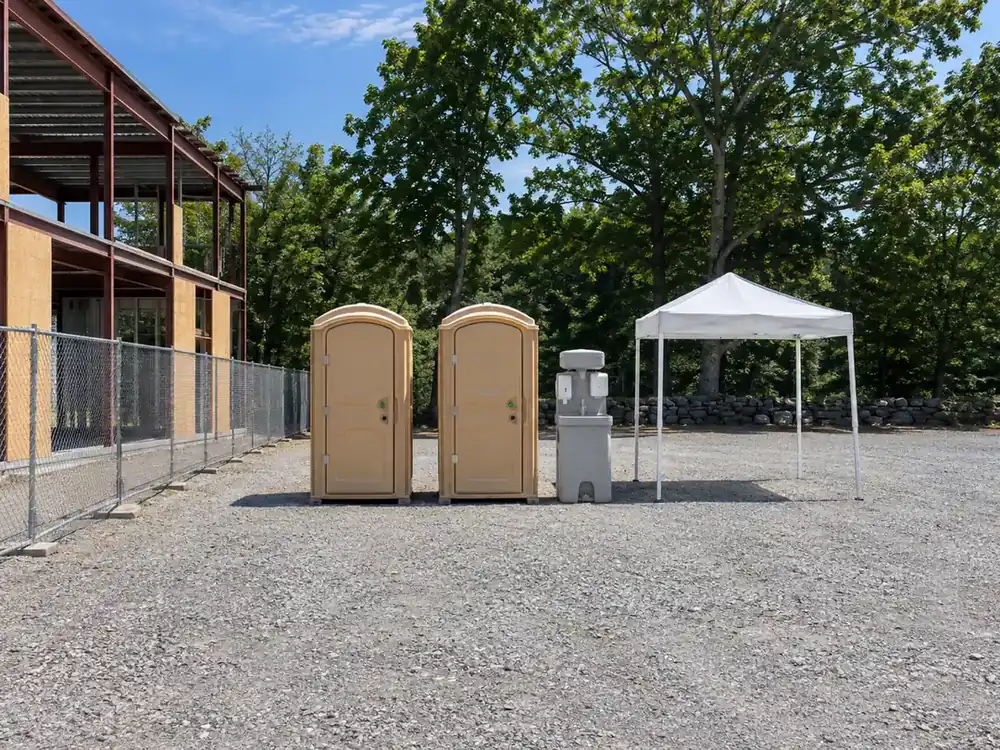
Employee Toilets and Washing Need Separate Planning
Construction employees need toilet provision, but a portable rental is not the only possible arrangement under the federal sanitation rule. In Connecticut, federal OSHA standards apply to private-sector workers, as OSHA's Connecticut coverage statement explains. The employer's safety lead should apply the rule to the actual work and facilities.
Settle Grounds Access Ahead of Placement
For work connected with a town green, beach or park event, discuss the grounds approval first, then school or church permission, and then the yard or job-site layout. Call while those arrangements are in progress. Keep public attendance separate from the construction workforce when describing who will use the toilets.
Bring the gate location, work area and proposed pad into the conversation. The delivery driver needs a placement that remains reachable as materials and equipment move through the site. Toilet access should be part of the layout discussion rather than an afterthought when the work area fills up.
Worker Numbers Shape the Toilet Provision
Portable toilet requirements for workers depend partly on employee numbers: the sanitation rule's table specifies a toilet facility for twenty or fewer employees and scales the facilities for larger groups, also shown in OSHA's published rule. The same rule text addresses temporary field conditions and lists toilet alternatives for sites without a sanitary sewer, subject to local codes.
A small crew is not automatically exempt: the mobile-crew exception concerns crews with transportation readily available to nearby toilets. For OSHA porta potty requirements, the safety lead should distinguish the workforce's actual arrangement from a general rental recommendation.
| Planning issue | Point to settle |
|---|---|
| Workforce | Employee numbers and facilities already accessible to them |
| Washing | The work being done and the washing arrangement |
| Public use | Whether visitors will share the toilets |
| Placement | A stable pad and access through changing site conditions |
Washing Facilities Have Their Own Requirements
Washing needs a separate plan: OSHA's washing provisions address lavatories, running water temperature, soap and hand drying, with a stated exception for certain mobile or unattended locations. A separate washing provision addresses work involving harmful contaminants. Discuss the hand-wash sink by its features; the name alone does not settle suitability.
Public Use Changes the Accessibility Discussion
Public use should be discussed separately from crew-only use. The ADA Standards' construction-site exception addresses portable toilets reserved exclusively for construction personnel; that exception does not describe units shared with the public. For clustered portable units, the toilet-facility provisions address accessibility and identification. Explain public use and the approach route when discussing an accessible toilet.
Arrange the Rental Around the Site
The sanitation text does not choose a rental model, a visit schedule or a delivery driver for the job. Construction site toilet requirements still need to be translated into a placement and service plan with the employer's safety lead involved. Ask about the one-person toilet, accessible toilet, hand-wash sink or restroom trailer according to that plan.
Keep units on firm, level ground apart from vehicles, working equipment, drains, water's edge and overhead lines. Leave each placed unit standing where it is, with any repositioning handled by the driver; do not tip, lift or climb on it. Waste handling belongs to the service driver. One of our local service partners will discuss the scope and price with you, including the selected units, site access and planned rental duration.