The short answer
- Permit needs depend on the town, the ground and the activity; event approval and toilet placement are separate matters to discuss.
- Public parks and streets bring ground-use rules into the rental plan, so ask the responsible town office about the proposed layout.
- For private yards, schools and church grounds, consider the owner's or grounds contact's permission alongside access, and ask the town office whether anything else applies.
Settle Public Ground, Then Grounds Permission and Access
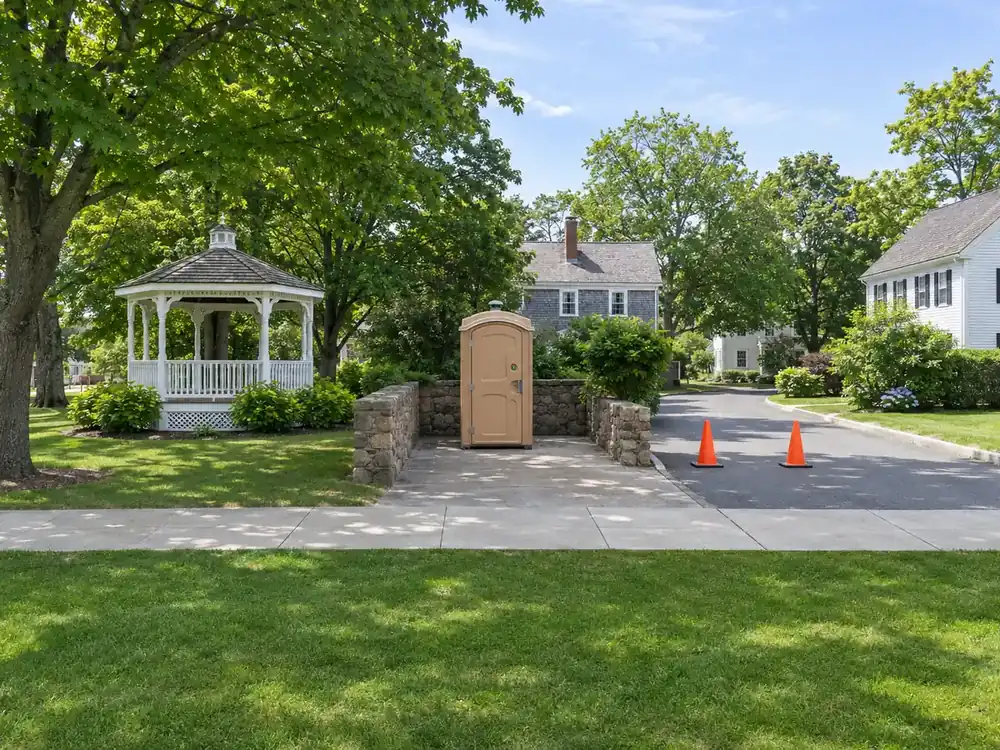
Permit requirements depend on the location and activity, so ask the office responsible for the proposed use rather than assume a toilet rental grants permission. Call now with the setting and tentative date. Public-ground applications come first in the planning order, followed by school or church permission, then yard and job-site access.
Greens, Beaches and Park Lots Come First
Public-ground events need the town's ground-use process considered alongside the toilet layout. Bridgeport, CT requires anyone hosting a city-park event to submit a permit request thirty days ahead, and some events need Parks Board approval, according to the city's park-event instructions. Ask Parks and Recreation about the proposed pad and delivery route while preparing the application.
For a town green porta potty rental, discuss the gathering's purpose and whether the public is invited. In Norwalk, CT, the public-gatherings code requires a City Clerk license for covered outdoor public gatherings expected to attract at least one hundred people, with the application made at least thirty days ahead. The same code excludes religious services and school functions from that article's definition; incidental use of an outdoor area adjoining a permanent event structure is also exempt from the outdoor-location condition.
Town green event portable toilet rental planning should address the approved footprint, guest approach and service access together. For a beach parking lot, ask the ground-use contact about the proposed position rather than assume the parking space is available for a unit. Avoid treating an event approval as permission for every proposed location.
Street Events Need a Placement Decision
Street fair porta potty rental planning must leave the approved pedestrian and vehicle routes usable. In Weston, CT, the town's street-obstruction rule requires written Board of Selectmen permission for an obstruction on a town highway, road shoulder or sidewalk, and for completely blocking a highway. Ask that office how the proposed unit position should be shown in the application.
A porta potty street permit discussion should describe whether the unit would occupy the roadway, shoulder, sidewalk or adjoining private land. Explain the delivery access too. A closed street still needs a planned route for the delivery driver and a clear approach for guests.
School Fields and Church Grounds Follow
School fields and church grounds need the owner's agreement on the position and access arrangements. Speak with the school grounds contact, church board or grounds coordinator about the pad, gates and use of indoor restrooms. A field booking should not be treated as permission to place a unit anywhere on the property.
For a temporary event with food, ask the event contact which local health office should review the food and hand-washing arrangements. Keep that discussion alongside the event application so the proposed sink position is considered with the food area.
Private Yards and Job Sites Come Last
For private yards, schools and church grounds, consider the owner's or grounds contact's permission alongside truck access, and ask the town office whether anything else applies. Portable toilet rental for property managers also calls for a discussion with the landlord or association about the proposed pad and shared driveway. Ask the town's building or zoning office about placement requirements for the address; owner consent alone should not be treated as a town decision.
Decide where to put a porta potty with the delivery driver while discussing the gate, pad and neighboring access. Describe overhead lines and any narrow turn. Keep neighboring driveways and shared paths open rather than plan around an assumed clearance distance.
Match the Ground to the Decision
The decision-maker depends on who controls the ground and the activity proposed there.
| Setting | Contact for the decision | Detail to discuss |
|---|---|---|
| Public green, beach or park lot | Town ground-use or event office | Event footprint and unit position |
| Street or sidewalk | Town street-use authority | Obstruction and delivery access |
| School field | School grounds contact | Permission and field-to-toilet route |
| Church grounds | Church board or grounds coordinator | Gate access and restroom use |
| Yard or construction lot | Owner and relevant town office | Pad, local requirements and truck route |
Keep Placement Safe Throughout the Rental
Safe porta potty placement means firm, level ground away from traffic, equipment, drains, the water's edge and overhead lines. Discuss the accessible toilet and hand-wash sink as part of the same layout. Never move, tip, lift or climb on a unit; ask the delivery driver about a needed change in position. Waste handling and pumping belong to the service driver, with service visits arranged by the delivery driver.
One of our local portable toilet partners will talk through the scope and price with you while delivery access and the rental details are being settled. Permission questions can be discussed during the call; completed applications are not a condition of making contact.