The short answer
- Winter portable toilet rental depends on legal street access and a plowed route into the placement area.
- A firm, level pad should sit outside the space used for snow storage and moving equipment.
- The delivery driver needs access to the gate and unit doors for delivery, service visits and pick-up.
Plan the Pad and Plow Route Together
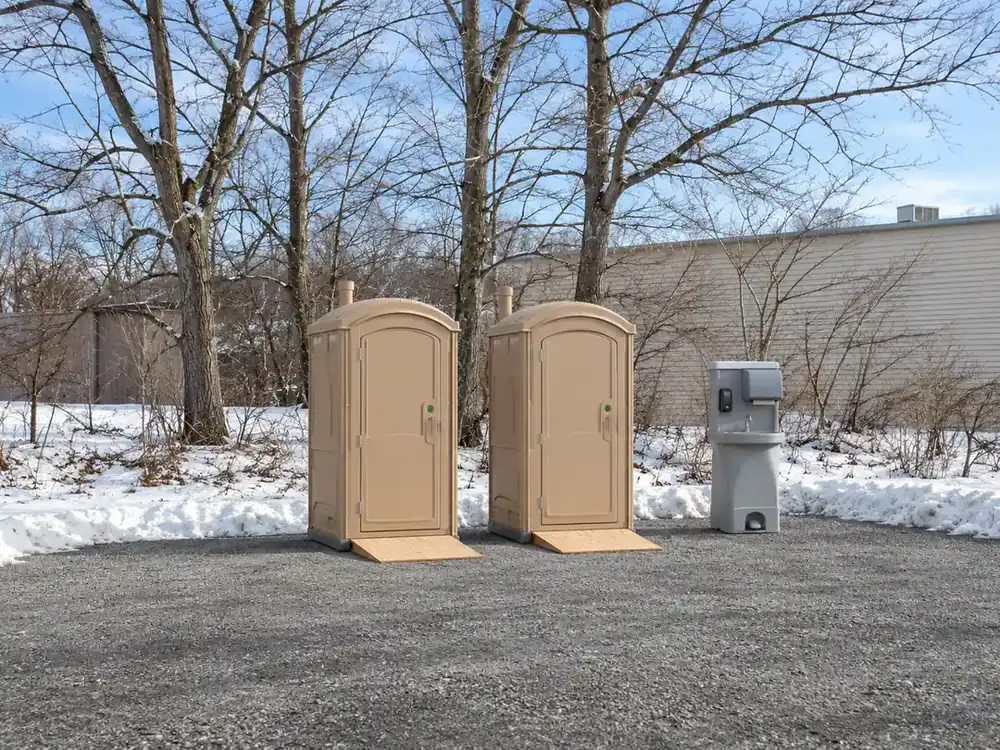
Winter placement needs a pad that stays reachable after the surrounding lot has been plowed. Call while the layout is still being decided. Describe where snow is usually piled, where vehicles turn and which gate reaches the proposed pad. Those details help keep a convenient autumn placement from becoming a blocked winter corner.
Public Grounds Need Their Approval Step First
For town greens, beaches and parks, put the grounds approval ahead of the unit placement plan. In Bridgeport, CT, city park event permit requests must be submitted at least thirty days ahead, according to the city's Park Events requirements. Discuss the proposed rental during the call while that approval is being arranged.
School fields and church grounds come next: involve the person responsible for the grounds and snow removal in the placement discussion. Yards and job sites follow, with the property contact identifying the gate, pad and snow storage area. Keep the approved event layout and the winter access route in the same conversation.
Snow Parking Rules Depend on the Town
Winter parking restrictions can change which side of a street can be used for a stop. The following rules concern vehicles; they do not authorize placing a portable toilet in the roadway.
| Town | Trigger and parking rule |
|---|---|
| Bridgeport, CT | During snow or ice accumulation declared by the mayor, parking alternates by calendar date: the even-address side on even dates and the odd-address side on odd dates, with each period beginning at seven in the morning, under the city's alternate-side ordinance. |
| West Haven, CT | Once snow begins, parking is banned on the even-address side of most roads, except roads posted against parking on the odd side; the ban lasts thirty-six hours after a storm, according to the city's Snow Information. |
A delivery or service visit must wait when the necessary street access is prohibited or the approach remains unplowed. A clear patch beside the unit does not make a blocked street passable. During the call, mention whether the approach depends on curbside parking, a shared drive or a gate across the lot.
Leave Space for Snow Without Moving the Units
A placement plan should reserve separate space for the unit, the approach lane and plowed snow. Choose firm, level ground away from traffic, working equipment, drains, the water's edge and overhead lines. Keep the gate opening, door swing and walking route outside the snow storage area.
Discuss the one-person toilet, accessible toilet, hand-wash sink or restroom trailer by its actual placement needs. Ask the delivery driver to explain the chosen model's winter arrangements. A familiar-looking unit is not evidence that every feature operates in freezing conditions.
Keep Access Open Through Pick-Up
Service access needs to remain part of the snow removal plan throughout the rental. Tell the grounds contact where the approach lane must stay clear. If a snowbank blocks a door or gate, report the obstruction and arrange access; never move, tip, lift or climb on a unit yourself. Leave waste handling to the service driver.
Winter portable toilet rental services involve more than choosing a spot for delivery. Discuss access for later visits and removal as well. One of our local service partners will explain how the unit choice, rental duration and access arrangements affect the scope and price before placement is arranged.