The short answer
- Headcount and duration determine the starting toilet count, with the delivery driver setting the final number for the planned use.
- Shared breaks and food or drink affect demand, so discuss the busiest part of the gathering rather than attendance alone.
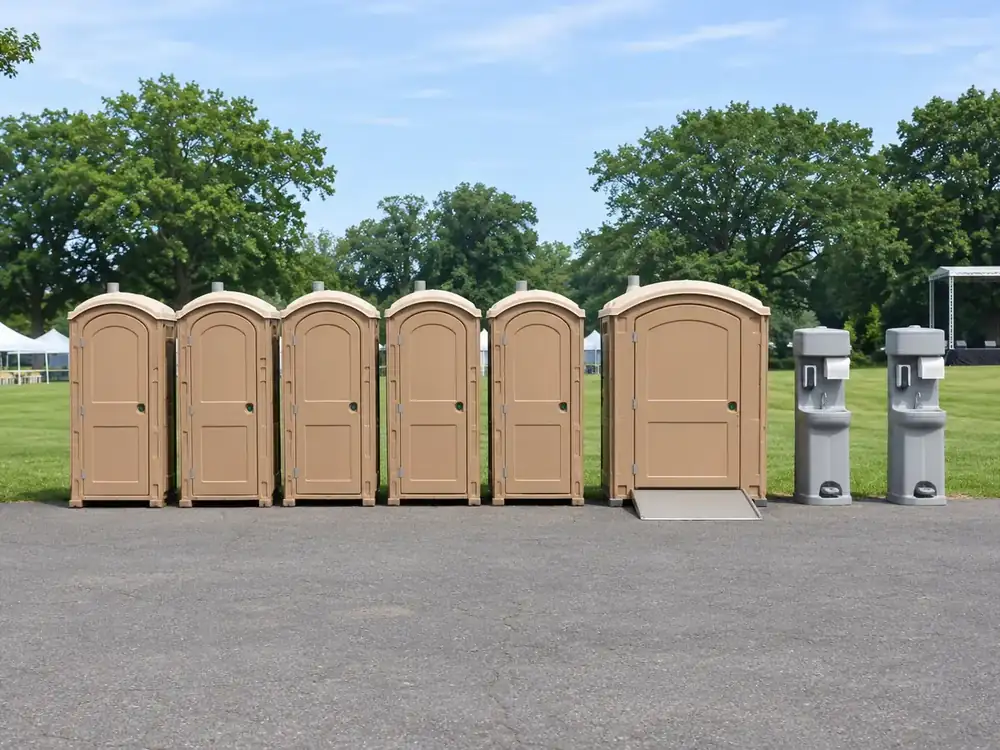
- Accessible toilets, hand-wash sinks and existing restroom access belong in the layout discussion alongside the number of standard units.
Plan for Peak Use and Accessible Routes
The right toilet count depends on who will use the units, how long they stay and when demand peaks. Call while the plans are still being discussed. An approximate headcount gives the conversation a starting point; the delivery driver sets the final number once the headcount, hours and food or drink are known.
Public Ground Sets the Planning Order
A town-green concert or beach gathering starts with the ground-use approval and the space allowed for toilets. In Bridgeport, CT, a city-park event requires a permit application submitted thirty days before the event, according to the Parks and Recreation event rules. Discuss the toilet layout while the event application is being prepared.
Explain whether guests arrive throughout the day or gather for the same performance. A steady flow and a shared interval call for different discussions about queues. Include vendors, organizers and people working at the gathering in the headcount conversation. Describe any existing restrooms and whether guests will actually have access to them throughout the event.
School Fields and Church Grounds Come Next
School field days and church fairs need the grounds owner's agreement on placement and access. Discuss the proposed pad with the school contact or church grounds coordinator. Ask whether indoor restrooms will be open, and describe the route from the field or fair to the toilets.
Plan the one-person toilet, accessible toilet and hand-wash sink together. Discuss a sink location that people can reach without crossing the toilet queue. Ask the delivery driver how service visits should be arranged around the planned use; do not assume a fixed visit schedule comes with every rental.
Yards and Coastal Builds Need Different Counts
A portable toilet for a wedding should be planned around the whole gathering, including the ceremony, meal and reception. Include people working at the venue when discussing demand. If you plan to rent a portable toilet for a wedding, describe indoor restroom access and the expected meal break during the call. Portable toilets for outdoor weddings also need a usable route from the seating area to the doors.
Portable toilets for wedding reception guests should remain reachable after furniture and screens are arranged. Discuss whether a restroom trailer suits the setting, along with the space needed for its entry. Screening should leave the approach and service access open.
For portable toilets for construction sites, use the workforce rather than an event guest count. OSHA's construction sanitation table lists a minimum of one toilet facility for twenty or fewer employees. The employer should review the applicable requirements with the site safety contact rather than use a wedding plan for a coastal build.
Match the Questions to the Setting
The most useful planning questions identify peak demand and the route to each unit.
| Situation | People and timing | Layout discussion |
|---|---|---|
| Town-green concert | Audience, staff and shared intervals | Approved area and queue space |
| School field day | Participants, helpers and scheduled breaks | Field route and indoor restroom access |
| Church fair | Visitors, stallholders and meal periods | Grounds permission and sink position |
| Backyard wedding | Guests, workers and reception length | Gate access and an accessible approach |
| Coastal build | Workforce and workday pattern | Safe pad and service access |
Keep the Approach Usable
An accessible toilet needs an approach people can use, so discuss the route as well as the unit. The ADA Standards' construction-site exception distinguishes toilets used exclusively by construction personnel from public-use facilities. Ask the event or site contact which accessibility requirements apply to the planned use.
Choose firm, level ground away from traffic, equipment, drains, the water's edge and overhead lines. Keep placed toilets in their original positions and ask the driver to relocate them; tipping, lifting and climbing on them are prohibited. Leave waste handling and pumping to the service driver. Service visits are arranged by the delivery driver. One of our local portable toilet partners will explain how the unit mix, rental duration and access affect the scope and price before arrangements are settled.